
When evaluating smart thermostat vs programmable thermostat, each offers a way to manage heating and cooling more efficiently. Key differences include automation, remote capabilities, available features, price, and everyday operation. Your HVAC requirements, household schedule, and preferred level of temperature control can help determine the better option.
This article explains how each thermostat operates, examines its benefits and drawbacks, and outlines important factors homeowners should evaluate when choosing the most suitable option for their HVAC system.
Comparing Your Thermostat Choices
Smart and programmable thermostats offer more precise temperature management than traditional manual models. However, differences in how they control settings and respond to household schedules can make one type a better fit for your home than the other.
How Does a Programmable Thermostat Work?
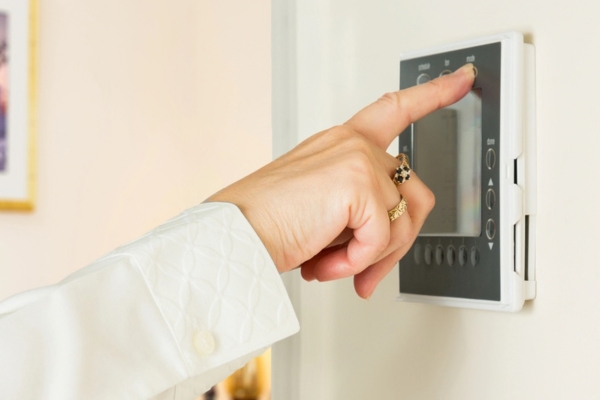
A programmable thermostat controls heating and cooling according to a schedule set in advance. Homeowners can assign specific temperatures for different periods and days. Typical scheduling options include 7-day, 5-2, and 5-1-1 formats, providing different levels of flexibility for weekday and weekend patterns. Programmable models provide straightforward, automatic temperature management and generally operate without Wi-Fi, smartphone apps, or other connected features.
Advantages and Drawbacks of Programmable Thermostats
Programmable thermostats provide scheduled temperature control without relying on the connectivity or sophisticated automation found in smart models. Their advantages and limitations often depend on whether a household follows a relatively predictable routine.
Advantages:
- More Affordable: Programmable thermostats typically have a lower upfront price than smart models, providing a cost-effective option for automating heating and cooling schedules.
- Straightforward Operation: After a schedule is configured, the thermostat changes temperatures at selected times without depending on Wi-Fi, mobile apps, or continuous connectivity.
Drawbacks:
- Less Scheduling Flexibility: Preset programs are most effective for consistent routines. Variable work schedules, vacations, or changing occupancy may require homeowners to adjust settings regularly.
- Requires Manual Updates: Homeowners need to set and revise programs as schedules or seasons change. Outdated or poorly configured settings may affect comfort and reduce potential energy savings.
How Does a Smart Thermostat Work?
A smart thermostat connects to Wi-Fi to provide more advanced HVAC system control. Homeowners can check and change temperature settings remotely through a smartphone, tablet, or other compatible device.
Many smart models feature geofencing, occupancy sensing, adaptive scheduling, and learning technology. These capabilities can adjust heating and cooling based on household patterns and activity. Smart thermostats may also track runtime, generate energy reports, and issue maintenance reminders, giving homeowners useful information about HVAC operation and energy consumption.
Benefits and Limitations of Smart Thermostats
Smart thermostats offer greater automation and temperature control than programmable models. However, these added capabilities may come with higher costs and greater reliance on connected technology.
Benefits:
- Enhanced Control and Convenience: Remote connectivity lets homeowners manage temperature settings from nearly anywhere, which can be particularly helpful when household schedules change unexpectedly.
- Smarter Energy Management: Occupancy controls and automatic adjustments can limit unnecessary HVAC operation, while energy reports provide useful insight into household usage patterns.
Limitations:
- Greater Upfront Expense: Smart thermostats usually cost more initially than programmable options, and professional installation can add to the overall cost.
- Reliance on Connected Technology: Certain functions depend on Wi-Fi, mobile devices, user accounts, or cloud-based services. Software support and data privacy are additional considerations when selecting a model.
Smart vs. Programmable Thermostats: Factors to Evaluate in Maine and New Hampshire

Selecting between these thermostat options requires looking beyond individual features. Your household routine, HVAC equipment, available budget, and desired degree of control can help determine which model fits your needs.
- Daily Household Routine: Programmable thermostats suit consistent schedules, while smart thermostats offer more flexibility for households with frequently changing routines.
- Automation Capabilities: Programmable models operate mainly through schedules established in advance. Smart thermostats may use occupancy, location, and household patterns to adjust temperatures automatically.
- HVAC Compatibility: Proper compatibility depends on system type, voltage, wiring, equipment staging, and other specifications. Certain smart models may require a common wire or another manufacturer-approved solution.
- Cost and Overall Value: Programmable thermostats usually have a more affordable initial price. Smart models typically cost more, but offer added automation, remote access, monitoring, and control capabilities.
- Connected-Home Compatibility: Smart thermostats can integrate with certain home automation systems and compatible devices, allowing homeowners to manage indoor comfort through a more centralized setup.
Choosing the Right Thermostat for Your Maine or New Hampshire Home
A programmable thermostat can be a practical option for households with consistent daily schedules. It manages temperature changes automatically without relying on Wi-Fi or connected technology. For less predictable routines, a smart thermostat provides added flexibility through remote access, adaptive controls, energy information, and smart-home connectivity.
Your heating and cooling equipment should also guide your selection. Compatibility varies based on system type, wiring, voltage, and specific control requirements. An HVAC professional can assess these details and recommend an appropriate thermostat. Professional installation can also help ensure proper communication between the thermostat and your HVAC system.
FAQs About Smart Thermostat vs Programmable Thermostat

Can Thermostat Location Affect Temperature Readings?
Yes. Where a thermostat is installed can influence how accurately it detects indoor temperature. Direct sunlight, drafts, exterior doors, windows, kitchens, supply vents, and nearby heat sources may distort readings and cause unnecessary HVAC cycling. A central interior location away from significant temperature fluctuations generally provides a more accurate representation of indoor conditions.
Can Upgrading a Thermostat Improve Comfort With an Existing HVAC System?
Yes, in some cases. When compatible and properly configured, a new thermostat can maintain temperatures more consistently, minimize unnecessary system operation, and align heating and cooling with household schedules. However, a thermostat upgrade cannot resolve underlying HVAC issues such as incorrect system sizing, airflow restrictions, or deteriorating equipment.
Can Weak Thermostat Batteries Cause HVAC Problems?
Yes. Low batteries in battery-powered thermostats can cause incorrect displays, lost settings, or communication problems with the HVAC system. Replacing the batteries according to the manufacturer’s recommendations can help maintain reliable thermostat operation and prevent unexpected control issues.
What Maintenance Does a Thermostat Require?
Thermostats generally need minimal upkeep, although occasional checks can support reliable operation. Keep the thermostat clean, replace batteries when necessary, confirm that temperature readings remain accurate, and monitor for delayed or inconsistent HVAC responses. During routine HVAC maintenance, a professional can also verify thermostat operation and communication with the system.
When Should You Consider Replacing a Thermostat?
Many thermostats can operate reliably for about 10 years or longer, depending on the model, installation, usage, and technology. Replacement may be appropriate when temperature readings become inaccurate, controls respond inconsistently, displays or buttons fail, or an older thermostat no longer supports the features your HVAC system requires.
Conclusion
Smart and programmable thermostats can provide better temperature management while limiting unnecessary HVAC operation. Programmable thermostats deliver straightforward scheduling with a lower initial cost, while smart models add remote control, advanced automation, energy information, and scheduling flexibility. Choosing between them ultimately depends on your household routine, budget, HVAC equipment, and desired level of control.
If you are ready to upgrade, contact Lake Region Energy for professional HVAC services throughout Maine and New Hampshire. An experienced technician can verify system compatibility, recommend an appropriate thermostat, and complete the installation correctly for dependable, efficient performance.
Call Lake Region Energy for HVAC Services in Maine and New Hampshire
Lake Region Energy delivers dependable heating and cooling services across Maine and New Hampshire, including thermostat installation and HVAC system assessments. Our certified technicians can evaluate your equipment, determine whether a smart or programmable thermostat is right for you, and install it professionally for reliable operation.
Our HVAC services also include system tune-ups, troubleshooting, repairs, replacements, and new installations. We focus on maintaining indoor comfort, supporting energy-efficient performance, and helping manage heating and cooling expenses. When your system requires service or an upgrade, our team can recommend practical options that fit your home’s requirements and budget.
Contact Lake Region Energy today to schedule thermostat or HVAC service in Maine or New Hampshire, or to request a convenient in-home estimate
For more information about our HVAC services and fuel deliveries, be sure to contact Lake Region Energy. You can click here to contact us, or you can call us at (207) 839-5500 to find out more. We offer a full line of heating and cooling repairs, maintenance services, and installations. Click the link to view our service area.

Related Articles: